
A Brief Window to Act
When asteroid 2024 YR4 was discovered on December 27, 2024, by the ATLAS telescope in Chile, it did not take long for alarm bells to ring. Within weeks, orbital calculations showed that this 60-metre space rock had a 3.1% probability of striking Earth in December 2032 — enough to earn it a rating of 3 on the Torino Scale, the highest any asteroid had received in over a decade.
For NASA's Planetary Defense Coordination Office, the scenario was no longer theoretical. A real asteroid with a real chance of impact had been identified, and the clock was ticking. Even though the probability was modest, the potential consequences of a 60-metre object slamming into Earth at tens of kilometres per second — releasing energy equivalent to roughly 7 megatons of TNT — demanded an immediate response study.
The question was simple but profound: if 2024 YR4 were confirmed to be on a collision course, could we stop it?
What NASA Studied
A team led by Brent Barbee at NASA's Goddard Space Flight Center quickly began evaluating mitigation options. Their analysis considered two primary approaches: a kinetic impactor (essentially ramming the asteroid with a spacecraft at high speed) and a nuclear disruption device (using a nuclear detonation near the asteroid's surface to alter its trajectory).
The study was constrained by an unusually tight timeline. With the potential impact date set for December 2032 and limited observation data available, any deflection mission would need to launch within a narrow window — between April 2030 and April 2032 — leaving barely enough time for spacecraft design, construction, and transit.
A reconnaissance mission launched in late 2028 was also proposed. This advance scout would fly past 2024 YR4 during its close approach to Earth, measuring the asteroid's mass, composition, and rotation — all critical data for calibrating a deflection attempt.
The Kinetic Impactor Option
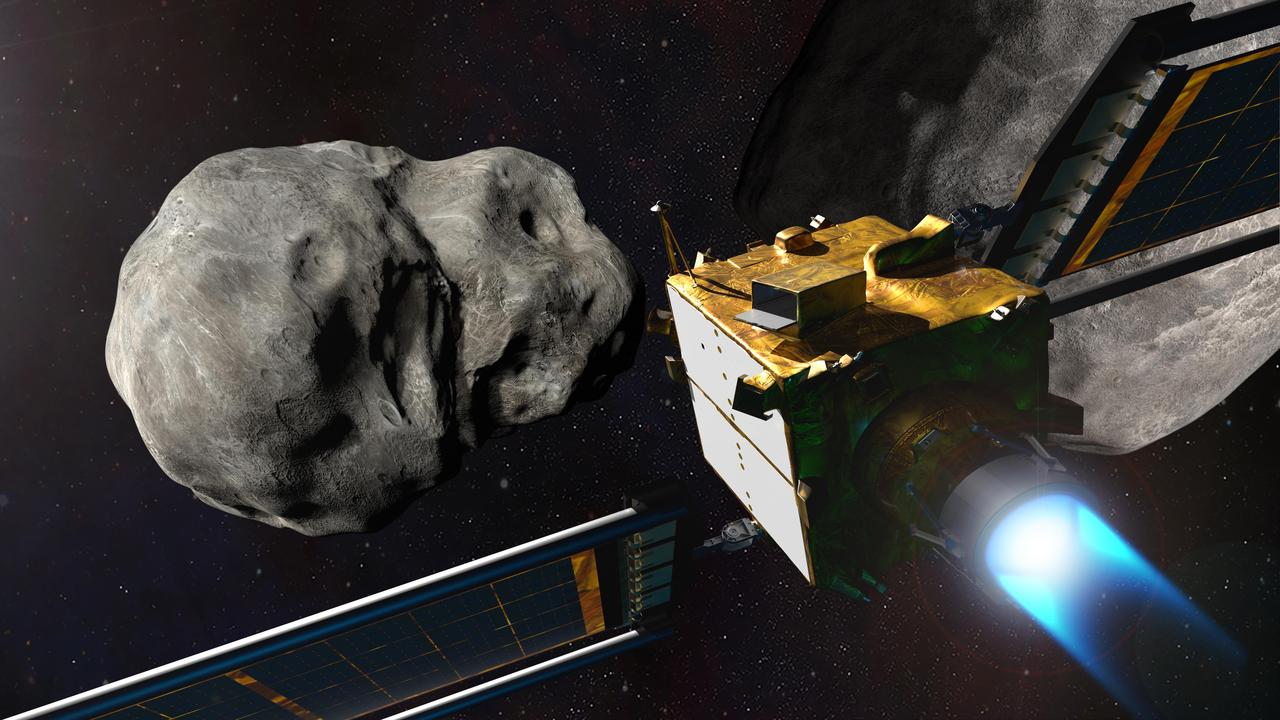
The preferred approach drew directly from NASA's DART (Double Asteroid Redirection Test) mission, which in September 2022 successfully altered the orbit of Dimorphos, a small moonlet orbiting the asteroid Didymos. DART proved that a spacecraft travelling at roughly 6 kilometres per second could impart enough momentum to measurably shift an asteroid's path.
For 2024 YR4, the concept was similar: launch a DART-derived spacecraft on a direct intercept course, slamming into the asteroid years before its predicted Earth encounter. At 60 metres in diameter, 2024 YR4 sits within the size range where kinetic impact is considered viable — large enough to be a serious threat, but small enough that a single well-aimed spacecraft could nudge it off course.
The advantages of this approach were clear:
- Proven technology. DART demonstrated that kinetic impact works in practice, not just in simulations.
- No political complications. Unlike nuclear options, a kinetic impactor does not require international treaties to be renegotiated.
- Scalable. Multiple impactors could be launched if a single spacecraft was deemed insufficient.
However, there was a significant concern. With limited knowledge of the asteroid's internal structure, there was a risk that an impactor could fragment the asteroid rather than deflect it — potentially creating multiple smaller but still dangerous objects on unpredictable trajectories.
Why Nuclear Was Deemed Impractical
The alternative — nuclear disruption — is often the first thing people think of, thanks to films like Armageddon and Deep Impact. But the reality is far more nuanced than Hollywood suggests.
A nuclear standoff detonation does not involve drilling into the asteroid and detonating a bomb inside it. Instead, a nuclear device would be detonated at a carefully calculated distance from the asteroid's surface. The intense burst of X-rays and neutrons would vaporise a thin layer of surface material, and the resulting jet of expanding gas would act like a rocket engine, pushing the asteroid in the opposite direction.
In theory, this approach delivers far more momentum change than a kinetic impactor — making it the only viable option for very large asteroids or very short warning times.
But for 2024 YR4, the nuclear option faced several critical obstacles:
- Insufficient lead time. Designing, building, testing, and launching a nuclear deflection mission within the available window was assessed as logistically impractical.
- Unknown composition. Without detailed knowledge of the asteroid's density, porosity, and surface properties, it was impossible to accurately predict how it would respond to a nuclear detonation.
- International coordination. Deploying nuclear devices in space requires navigating complex international agreements, including the Outer Space Treaty. The political timeline alone could exceed the physical timeline.
- Risk of fragmentation. A nuclear detonation could shatter the asteroid into multiple pieces, some of which might still be on a collision course with Earth — a cure potentially worse than the disease.
For these reasons, the Goddard team concluded that a nuclear approach appeared impractical for the 2024 YR4 scenario specifically, though it remains in NASA's long-term planetary defence toolkit for larger or more urgent threats.
The 2028 Close Approach: A Critical Checkpoint
One of the most important dates in the 2024 YR4 story is not December 2032 but rather 2028, when the asteroid will make a relatively close pass by Earth. During this flyby, ground-based radar facilities — including NASA's Goldstone Deep Space Communications Complex and the Arecibo-successor facilities — will be able to track the asteroid with extraordinary precision.
These radar observations will accomplish two things:
- Dramatically narrow the orbital uncertainty. The current probability estimates are based on limited optical observations. Radar ranging can pin down the asteroid's position and velocity to within metres, reducing the uncertainty in its 2032 trajectory by orders of magnitude.
- Determine if deflection is needed at all. If the 2028 observations show that 2024 YR4 will definitively miss both Earth and the Moon, no deflection mission is required. If the risk persists or increases, the April 2030 launch window becomes the first viable opportunity to act.
This checkpoint turns the 2024 YR4 scenario into a staged decision process rather than an all-or-nothing gamble.
International Coordination Through SMPAG
NASA did not study this problem in isolation. The response to 2024 YR4 involved coordination through SMPAG — the Space Mission Planning Advisory Group — an international body established by the United Nations to coordinate planetary defence efforts among the world's space agencies.
ESA (the European Space Agency) actively monitored 2024 YR4 through its Near-Earth Object Coordination Centre (NEOCC) in Italy, contributing independent orbital calculations and risk assessments. The parallel analysis by multiple agencies provided crucial validation: when both NASA and ESA's models converged on similar probability estimates, scientists could be confident in the numbers.
This kind of multi-agency cooperation is exactly what decades of planetary defence exercises — including the biennial Planetary Defense Conference tabletop exercises — have been preparing the world for. The 2024 YR4 episode was, in many ways, the first real-world test of that infrastructure.
The Threat Today: Effectively Ruled Out
As observations continued through January and February 2025, the news improved dramatically. Each new data point refined the orbital solution, and by February 23, 2025, NASA announced that continued observations had effectively ruled out any significant threat to Earth from 2024 YR4 in 2032 and beyond. The asteroid's Torino Scale rating was lowered to 0.
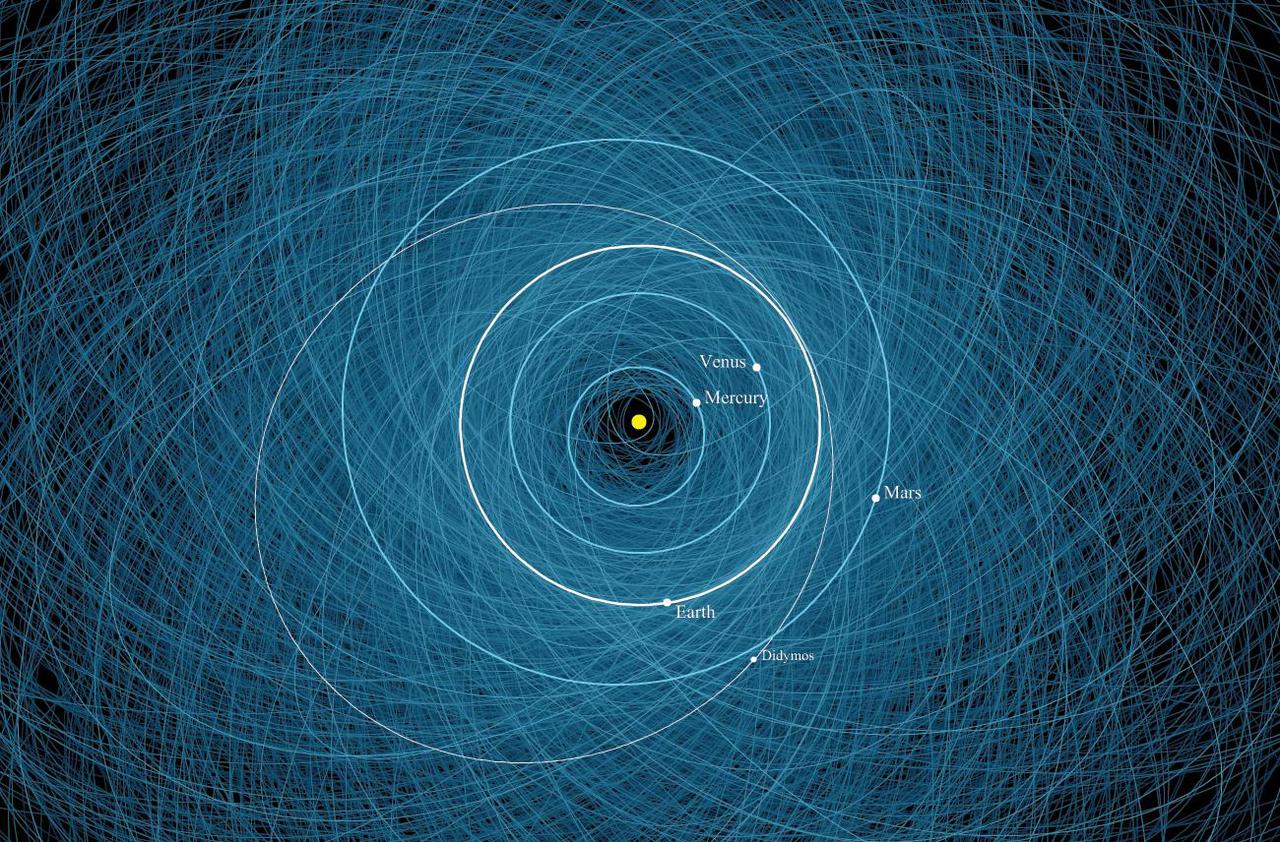
The remaining concern is the Moon. Current calculations still give 2024 YR4 an approximately 4% chance of striking the lunar surface on December 22, 2032. If that were to happen, it would be the most energetic lunar impact ever witnessed by humanity — a flash visible from Earth, potentially creating a crater roughly one kilometre across.
But from a planetary defence standpoint, a lunar impact poses no direct threat to life on Earth. It would, however, be an extraordinary scientific event and a powerful demonstration of why asteroid tracking matters.
What This Means for Planetary Defence
Even though the 2024 YR4 threat was ultimately downgraded, the episode was anything but a false alarm. It was a real-world stress test of humanity's asteroid detection and response capabilities — and by most measures, the system performed well.
The detection-to-assessment pipeline worked as designed: ATLAS discovered the object, automated systems flagged the elevated impact probability, and within days the global planetary defence community was analysing options. The fact that a credible deflection study was produced within weeks of discovery is a testament to how far the field has come.
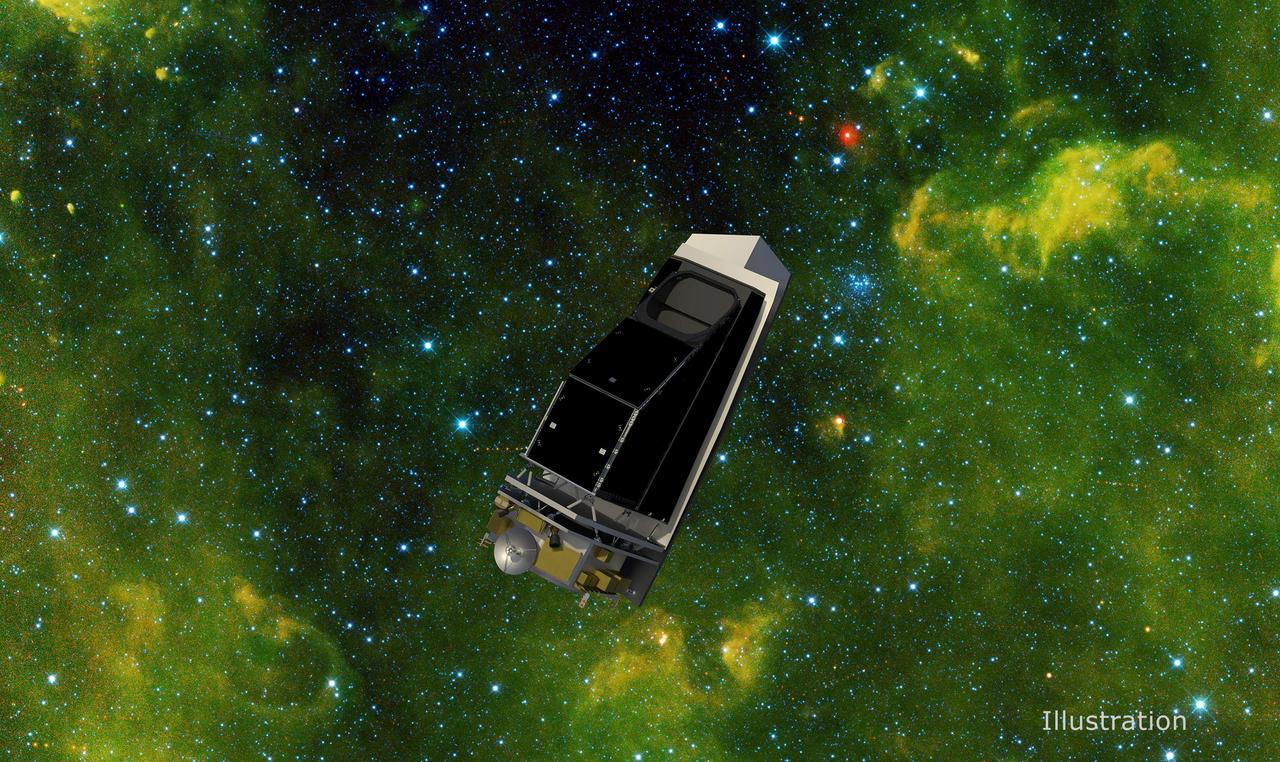
Looking ahead, several developments will strengthen our ability to respond to future threats:
- NEO Surveyor, NASA's dedicated near-Earth object hunting space telescope, is expected to launch in the coming years and will dramatically increase the catalogue of known asteroids.
- The Vera C. Rubin Observatory in Chile will begin its Legacy Survey of Space and Time, capable of discovering tens of thousands of new near-Earth objects.
- Follow-on DART missions and concepts like ESA's Hera mission (which visited the Didymos system in late 2024 to study the aftermath of the DART impact) will continue to refine kinetic impactor technology.
The lesson of 2024 YR4 is both reassuring and sobering. Our detection systems work. Our response protocols function. But the margins are thin, the timelines are tight, and the next asteroid that reaches Torino Scale 3 may not conveniently downgrade itself before a decision must be made.
Data sourced from NASA Goddard Space Flight Center, JPL/CNEOS, ESA NEOCC, and the SMPAG. Last updated February 2025.